Key Stage 1
Key Stage 1 (Years 1 & 2)
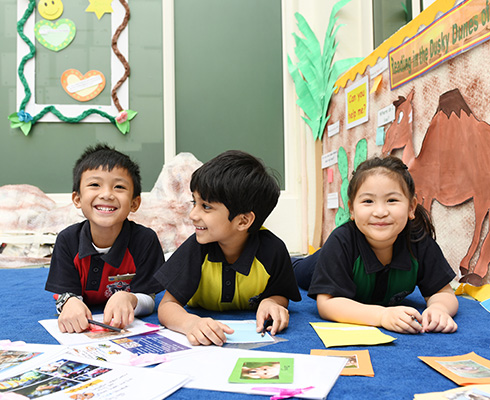
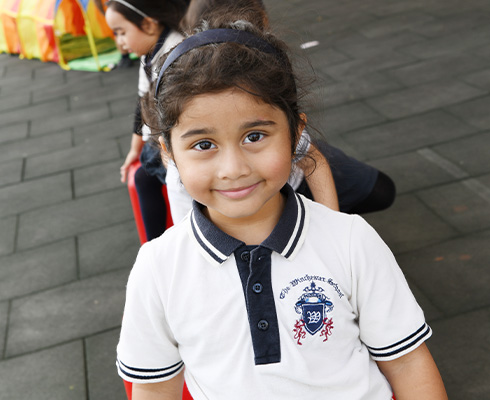
Key Stage 1 marks an exciting stage in every child's educational journey as they build on the strong foundations established in the Early Years Foundation Stage (EYFS). Covering Years 1 and 2, our curriculum follows the National Curriculum for England, providing a broad, balanced, and engaging education that is inclusive, personalised, and responsive to the needs of every learner.
Through adaptive teaching and evidence-informed practice, our teachers use a range of assessment data to personalise learning, ensuring that every child is appropriately supported, challenged, and empowered to achieve their full potential. As students deepen their knowledge and understanding, they develop the essential skills, confidence, and curiosity needed for lifelong learning.
Our nurturing and stimulating learning environment encourages children to explore, question, investigate, collaborate, and think critically, while fostering creativity, resilience, wellbeing, and a lifelong love of learning.
Our Approach to Learning
Learning in Key Stage 1 is designed to inspire curiosity and develop a genuine love for learning. We recognise that children learn best through a combination of structured teaching, practical experiences, collaborative activities, and meaningful real-world connections.
Our teaching approach combines:
- Experiential and hands-on learning
- Activity based learning
- Inquiry-based exploration
- Collaborative learning opportunities
- Cross-curricular learning experiences
- Personalised learning pathways
- Continuous assessment to support individual progress
Children are encouraged to become active participants in their own learning by asking questions, solving problems, making connections, and reflecting on their experiences.
Developing Future-Ready Learners
Our curriculum goes beyond academic achievement to nurture the knowledge, skills, and attributes children need to thrive in an ever-changing world.
We encourage every learner to:
- Think critically and creatively
- Develop resilience and confidence
- Communicate effectively
- Collaborate with others
- Solve problems independently
- Show curiosity and initiative
- Take responsibility and ownership of learning
- Become responsible and respectful global citizens
These skills are embedded across all areas of learning and prepare children for continued success throughout their educational journey.
The Key Stage 1 Curriculum
The National Curriculum for England provides children with a rich and balanced education across a wide range of subjects.
Core Subjects
- English
- Mathematics
- Science
Foundation Subjects
- Computing or Information and Communication Technology (ICT)
- Humanities (History and Geography)
- Music
- Physical Education (PE)
Ministry of Education (MOE) and other Subjects
- Arabic
- Islamic Education (For Muslim Students)
- Personal, Social, Health, Community, Enterprise/Entrepreneurship Education-PSHCEE (For Non-Muslim Students)
- Social Studies (For Arab Students)
- Moral, Social and Cultural Studies (For Non-Arab Students)
- Moral Education
Through an integrated approach, children develop strong subject knowledge while making meaningful links across different areas of learning.
Literacy and Numeracy Excellence
Developing secure literacy and numeracy skills remains a key priority throughout Key Stage 1.
In English, children continue to strengthen their:
- Reading fluency and comprehension
- Spoken language and communication
- Creative and factual writing
- Grammar, punctuation, and spelling
- Vocabulary development
In Mathematics, children develop confidence through practical and investigative learning, exploring:
- Number and place value
- Addition, subtraction, multiplication, and division
- Fractions
- Measurement
- Geometry
- Statistics
- Mathematical reasoning and problem-solving
Children are encouraged to explain their thinking, justify their answers, and apply mathematical concepts to everyday situations.
Experiential Learning
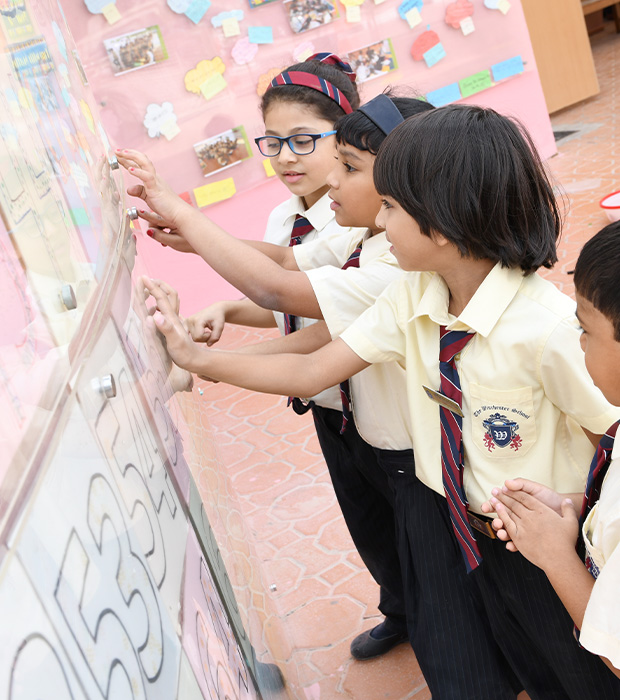
Experiential learning is an integral part of our Key Stage 1 curriculum. Children deepen their understanding through meaningful experiences that encourage exploration, reflection, and application.
Learning comes alive through:
- Scientific and Mathematical investigations
- Enquiry based learning
- Activity based and hands on learning
- Outdoor learning experiences
- Educational visits
- Role play and drama
- Collaborative projects
- Practical problem-solving activities
- Research based learning
- Community-based learning
- Cross-curricular themed learning
These authentic experiences enable children to make real-world connections while developing confidence, independence, and curiosity.
STEAM Learning
Our integrated STEAM (Science, Technology, Engineering, Arts and Mathematics) programme encourages innovation, creativity, and critical thinking.
Children engage in exciting STEAM experiences by:
- Designing and building solutions to real-world challenges
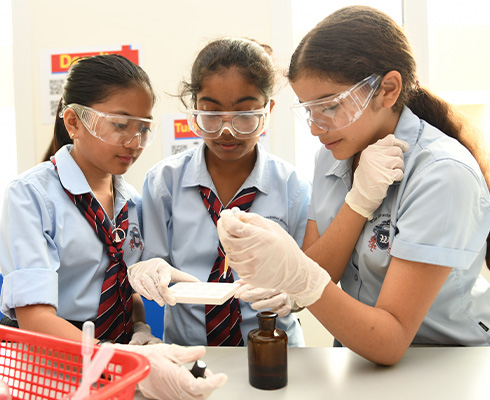
- Conducting scientific investigations
- Exploring engineering concepts through construction and design
- Applying mathematical thinking to practical situations
- Creating through art, music, and design
- Developing computational thinking and early coding skills
STEAM learning encourages collaboration, experimentation, and resilience, helping children become confident problem-solvers and innovative thinkers.
AI-Enhanced Learning
Technology plays an important role in enriching learning experiences across Key Stage 1.
Our age-appropriate approach to Artificial Intelligence (AI)-enhanced learning supports personalised learning while promoting responsible digital citizenship.
Children engage with technology through:
- Interactive digital learning platforms
- AI-supported personalised learning activities
- Creative multimedia projects
- Early computational thinking and coding
- Digital research and information literacy
- Safe, ethical, and responsible use of technology
AI is used thoughtfully to enhance teaching and learning while ensuring that creativity, collaboration, critical thinking, and human interaction remain central to every classroom experience.
A Highly Personalised and Inclusive Curriculum
At Key Stage 1, we recognise that every child is unique, developing at their own pace with individual strengths, interests, and learning needs. Our inclusive curriculum is designed to ensure that every learner feels valued, supported, and challenged, enabling them to build confidence, foster independence, and achieve their full potential.
Through adaptive teaching and carefully planned learning experiences, our teachers create an environment where every child can thrive. Learning is personalised through appropriate support, challenge, and enrichment, ensuring that all students develop secure foundations in literacy, numeracy, communication, and personal and social development while making sustained progress across the curriculum.
Assessment for Learning
Assessment is ongoing and designed to support every child's individual learning journey.
A robust assessment framework underpins our personalised approach to learning. Teachers use a wide range of assessment data to identify each child's strengths, monitor progress, and plan a highly personalised and responsive teaching that meets individual learning needs. This includes:
- Ongoing formative assessment through observation, questioning, feedback, and day-to-day classroom interactions to inform next steps in learning.
- Summative assessments to monitor attainment and progress against the expectations of the National Curriculum for England.
- The Year 1 Phonics Screening Check to assess children's decoding skills and inform targeted support in early reading.
- The New Group Reading Test (NGRT) in Year 2 to evaluate reading fluency, comprehension, and reading development, enabling teachers to tailor literacy instruction effectively.
By bringing together evidence from these assessments, our teachers gain a comprehensive understanding of each learner's academic progress, learning profile, and developmental needs. This enables them to provide timely interventions, appropriate challenge, and personalised learning pathways that ensure every child continues to grow in confidence and achieve success.
Regular feedback helps children reflect on their learning, celebrate achievements, and understand their next steps, fostering confidence and a growth mindset.
Parents are kept informed through regular communication, progress reports, and parent-teacher consultations, ensuring a strong partnership in every child's education.
Our commitment to inclusive education ensures that every child benefits from high-quality teaching, equitable opportunities, and a nurturing learning environment where they develop the knowledge, skills, and positive attitudes needed to flourish in Key Stage 1 and beyond.
Preparing for Key Stage 2
By the end of Key Stage 1, children have developed strong foundations in literacy, numeracy, scientific enquiry, digital literacy, and personal development.
They progress to Key Stage 2 as confident, independent learners who are equipped with the curiosity, resilience, and critical thinking skills needed to embrace new challenges and achieve their full potential.
Why Choose Our Key Stage 1?
- Follows the National Curriculum for England
- Experienced and dedicated educators
- Strong foundations in English, Mathematics, and Science
- Fully inclusive and highly personalised learning
- Child-centred and inquiry-driven learning
- Experiential learning through real-world experiences
- Integrated STEAM education to inspire innovation and creativity
- Age-appropriate AI-enhanced learning that supports personalised learning
- Purposeful use of technology to develop digital literacy
- Continuous assessment to support individual progress
- A nurturing environment that promotes wellbeing, confidence, and independence
- Excellent preparation for success in Key Stage 2
More To Explore
-
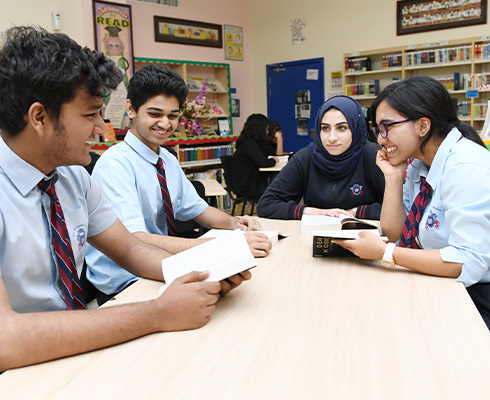
Curriculum Overview
The National Curriculum for England provides students with an education that is recognized and held in esteem around the world.
-
Extra-curricular Activities
At The Winchester School we encourage every child to explore their strengths and capabilities because we believe that ‘Every Child Matters’.
-
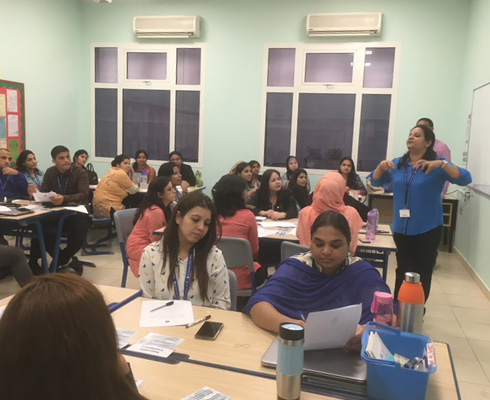
Professional Development
The aim of The Winchester School’s professional development is to provide specialized training in the latest pedagogy and classroom practices for educators.