English Department - Primary
English Department – Primary
Inspiring Confident Communicators, Critical Thinkers and Lifelong Readers
At The Winchester School, we believe that language lies at the heart of learning. Through an ambitious, inclusive and highly personalised English curriculum, we nurture confident communicators, enthusiastic readers, thoughtful writers and articulate speakers who are equipped with the literacy skills needed to thrive academically and beyond.
Our curriculum follows the National Curriculum for England, ensuring that every child develops a secure foundation in speaking and listening, reading, writing, grammar, punctuation and spelling, while fostering a genuine love of literature and language.
By integrating adaptive teaching, experiential learning, oracy, STEAM, Artificial Intelligence (AI)-enhanced learning, and the purposeful use of digital technologies, we create rich and engaging learning experiences that inspire creativity, critical thinking and a lifelong passion for learning.
English Leadership
English Coordinator (Key Stage 1): Ms. Cynthia Pinto
Email: [email protected]
English Coordinator (Year 3 – Year 6): Ms. Rizwana Azim
Email: [email protected]
Our Department Philosophy
We aspire to develop learners who:
- Read widely and for pleasure across a rich range of high-quality texts.
- Write confidently, creatively and purposefully for different audiences and purposes.
- Speak with confidence, clarity and empathy.
- Listen actively, question thoughtfully and engage in meaningful dialogue.
- Think critically, communicate effectively and collaborate successfully.
- Become digitally fluent, responsible and ethical users of language and technology.
- Develop the literacy skills required for success across the curriculum and in life.
An Inclusive and Highly Personalised English Curriculum
Every child is unique, and our English curriculum reflects this belief.
Through adaptive teaching, carefully planned learning experiences and responsive assessment, we personalise learning to ensure every student is appropriately supported, challenged and inspired to achieve their full potential.
Teachers use a comprehensive range of assessment evidence to identify individual strengths, monitor progress, and personalise learning. This includes classroom observations, formative and summative assessments, the Year 1 Phonics Screening Check, GL Assessments such as the New Group Reading Test (NGRT), Cognitive Abilities Test (CAT4), and Progress Test in English (PTE), as well as international benchmark assessments including the Progress in International Reading Literacy Study (PIRLS), where applicable. Together with curriculum-based assessments, this evidence informs adaptive teaching, targeted interventions, appropriate challenge, and personalised next steps, ensuring every learner is supported to achieve their full potential.
This evidence-informed approach ensures that every learner, including multilingual learners, students of determination and high achievers, receives the appropriate level of challenge and support to make excellent progress.
English Across the Primary School
Learning progresses seamlessly from the Early Years Foundation Stage through to Key Stage 2, ensuring continuity, progression, and increasing challenge. Through carefully sequenced learning experiences, students develop the knowledge, skills, and understanding required to become confident readers, writers, speakers, and listeners.
Early Years Foundation Stage (FS1 & FS2)
In the Early Years Foundation Stage, children follow the EYFS Statutory Framework for England, where Communication and Language and Literacy are key areas of learning.
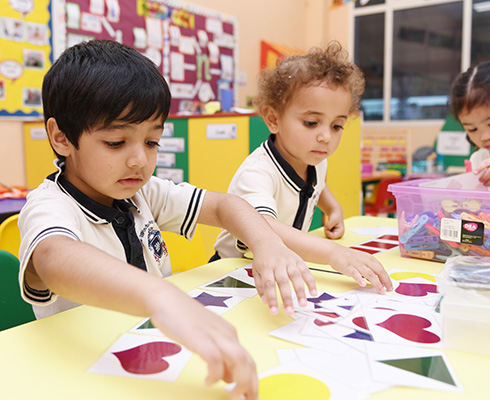
Children develop communication and literacy through purposeful play, storytelling, high-quality interactions, songs, rhymes, and language-rich experiences that encourage curiosity, creativity, and confidence.
Learning focuses on:
Communication and Language
Children develop:
- Listening, attention and understanding
- Speaking with increasing confidence
- Vocabulary development
- Conversation and communication skills
Literacy
Children develop early literacy through:
- Comprehension
- Word Reading
- Writing
A rigorous Systematic Synthetic Phonics programme provides the foundations for successful reading and writing while fostering a lifelong love of books and storytelling.
Key Stage 1 (Years 1–2)
Building on the strong foundations established in EYFS, students follow the National Curriculum for England, developing secure literacy skills through engaging and purposeful learning experiences.
Spoken Language
Students develop confidence in speaking and listening through discussions, storytelling, drama, presentations, collaborative learning, and purposeful classroom dialogue. They build vocabulary, listen attentively, ask relevant questions, and communicate effectively in different contexts.
Reading
Reading is taught through two closely connected dimensions:
Word Reading: Children develop secure decoding, accuracy, fluency, and automaticity through Systematic Synthetic Phonics, enabling them to become confident independent readers.
Comprehension: Students explore a rich variety of fiction, non-fiction, and poetry while developing vocabulary, retrieval, inference, prediction, sequencing, explanation, and critical thinking skills.
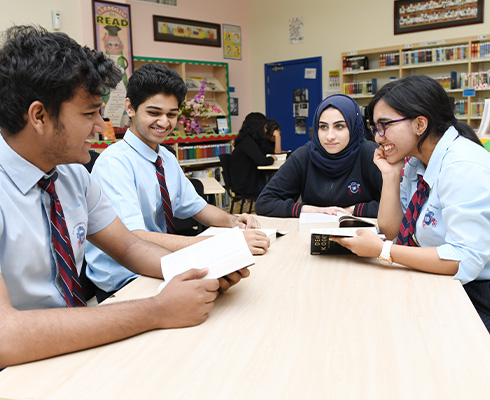
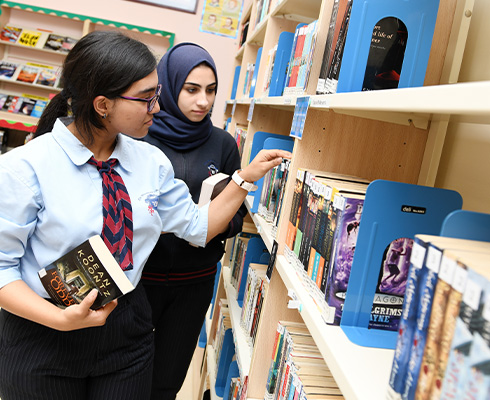
Reading for pleasure is promoted through class novels, guided reading, independent reading, library sessions, author studies, and whole-school reading initiatives.
Writing:
Writing is developed through two complementary dimensions:
Transcription: Children develop accurate spelling and fluent handwriting while applying phonics knowledge and spelling conventions.
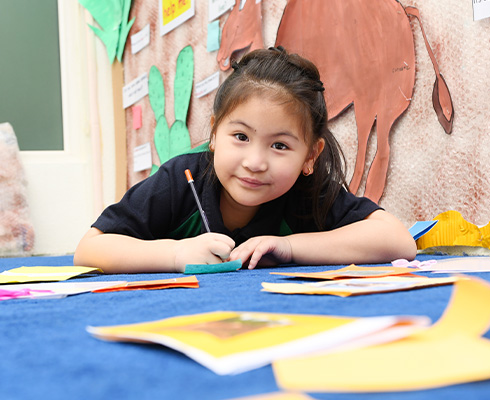
Composition: Students learn to plan, draft, edit, evaluate, and publish writing for different audiences and purposes across a range of genres.
Spelling, Vocabulary, Grammar and Punctuation: Children develop a secure understanding of vocabulary, grammar, and punctuation, enabling them to communicate accurately and confidently in both spoken and written English.
Key Stage 2 (Years 3–6)
In Key Stage 2, students deepen and extend their literacy skills, becoming increasingly independent readers, writers, and communicators.
Spoken Language
Students develop effective communication through presentations, debates, drama, collaborative discussions, performances, and purposeful classroom dialogue, enabling them to express ideas confidently and adapt their language for different audiences and purposes.
Reading
Reading continues to develop through:
Word Reading: Students consolidate reading fluency, accuracy, and automaticity while developing confidence when tackling increasingly challenging texts.
Comprehension: Students interpret, analyse, compare, infer, summarise, evaluate, and respond critically to a broad range of fiction, non-fiction, poetry, and literary heritage texts.
Reading for pleasure remains central to our curriculum, fostering curiosity, empathy, imagination, and a lifelong appreciation of literature.
Writing
Writing develops through:
Transcription: Students apply increasingly sophisticated spelling patterns and maintain fluent, legible handwriting.
Composition: Learners plan, draft, revise, edit, and publish high-quality writing for a wide range of audiences, purposes, and genres while selecting vocabulary and grammatical structures with increasing precision.
Vocabulary, Grammar and Punctuation: Students deepen their understanding of language, grammar, and punctuation, enabling them to communicate with accuracy, sophistication, and creativity.
Systematic Synthetic Phonics
Early reading is built upon a rigorous Systematic Synthetic Phonics programme that develops secure decoding, fluency, and spelling. Through structured, engaging, and sequential teaching, children learn to recognise, blend, segment, and apply phonemes confidently in both reading and writing.
Regular assessment, including the Year 1 Phonics Screening Check, enables teachers to identify next steps and provide timely intervention, ensuring every learner develops the foundations for successful reading.
Read Like a GEM
Reading is at the heart of our curriculum, and the Read Like a GEM programme provides an enhanced focus on developing reading, language acquisition, and literacy skills across the primary years. Through a combination of universal and targeted provision, the programme ensures that every learner receives the appropriate support and challenge to become a confident, fluent, and enthusiastic reader.
To further personalise learning, we utilise evidence-informed digital platforms such as FlashAcademy and ReadingWise, which strengthen phonics, reading fluency, vocabulary, comprehension, language acquisition, and literacy through adaptive, personalised learning pathways. Together, these approaches foster a culture of reading for pleasure while enabling every student to develop the literacy skills essential for success across the curriculum and beyond.
Reading: Developing Lifelong Readers
Reading is at the heart of our curriculum and underpins success across all areas of learning.
Following the recommendations of the DfE Reading Framework, we cultivate both reading proficiency and reading for pleasure, enabling children to become fluent, confident and reflective readers.
Our reading curriculum develops:
- Systematic Synthetic Phonics
- Reading fluency
- Vocabulary development
- Reading comprehension
- Critical analysis and interpretation
- Reading stamina and independence
- Reading for pleasure across diverse and inclusive literature
Children experience a rich variety of fiction, non-fiction, poetry and contemporary literature from different cultures and perspectives, fostering empathy, imagination and global awareness.
Reading is developed through:
- Daily reading opportunities
- Whole-class shared reading
- Guided reading
- Independent reading
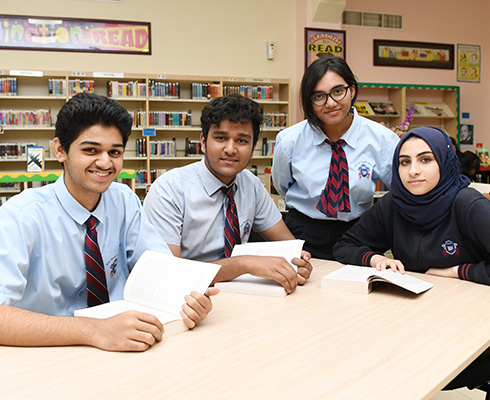
- Library lessons
- Author studies
- Reading journals
- Storytelling experiences
- Reading enrichment events and competitions
Writing with Purpose
We empower children to become confident writers who communicate ideas effectively, creatively and accurately.
Our writing curriculum develops children's ability to write for a wide range of audiences and purposes while strengthening their understanding of grammar, punctuation, spelling and vocabulary.
Students learn to:
- Plan, draft, edit and publish their writing
- Write creatively and imaginatively
- Construct persuasive and informative texts
- Develop authorial voice
- Use ambitious vocabulary
- Apply grammar accurately and purposefully
- Reflect on and improve their own writing
Writing opportunities are carefully planned across the curriculum, allowing children to apply literacy skills in meaningful real-world contexts.
Developing Oracy
We believe that spoken language is fundamental to learning.
Children develop confident communication through:
- Structured classroom discussions
- Debates
- Presentations
- Storytelling
- Drama
- Role play
- Poetry performances
- Collaborative learning
- Public speaking opportunities
These experiences strengthen vocabulary, reasoning, confidence and communication while preparing students to become articulate global citizens.
Innovation Through AI and Digital Learning
Technology enhances learning by making literacy more engaging, personalised and accessible.
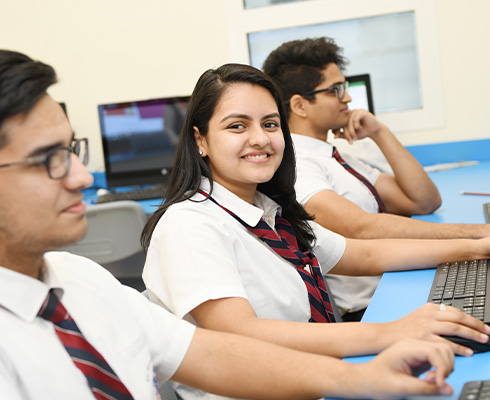
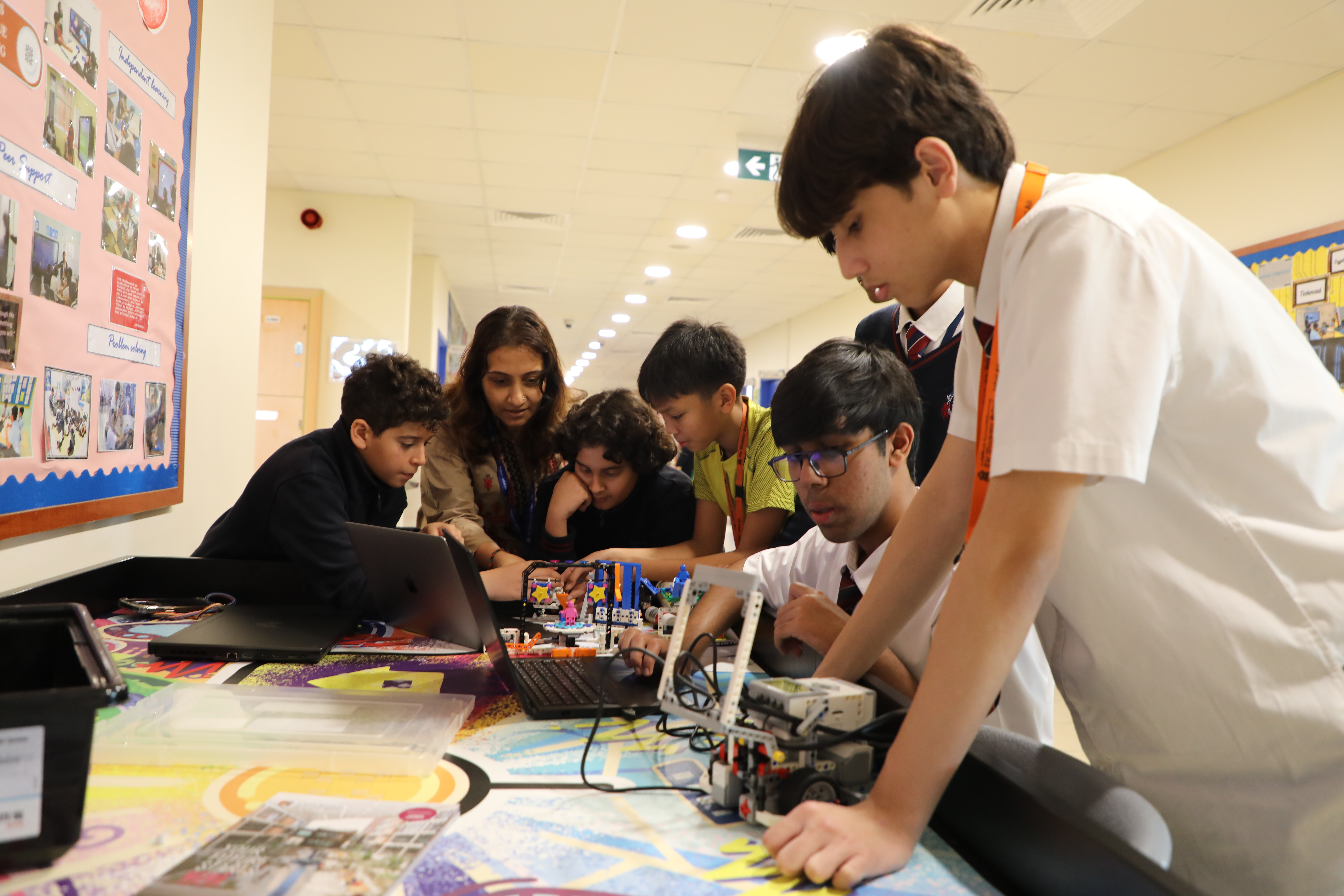
Our English curriculum thoughtfully integrates Artificial Intelligence (AI) and digital technologies to support creativity, collaboration and independent learning.
Students use innovative technologies to:
- Develop reading fluency and comprehension
- Receive personalised learning pathways
- Improve writing through guided feedback
- Create multimedia presentations and digital storytelling
- Conduct age-appropriate research
- Collaborate on shared writing projects
- Build digital literacy and responsible online communication
Alongside AI-supported learning, students develop an understanding of the ethical, responsible and safe use of emerging technologies.
Technology is used purposefully to enrich learning while ensuring that high-quality teaching, discussion and meaningful human interaction remain central to every lesson.
Experiential and Cross-Curricular Learning
Language is learned most effectively when used in authentic contexts.
Our English curriculum is enriched through experiential learning opportunities that encourage children to apply their literacy skills across the wider curriculum.
Students engage in:
- Drama and role play
- Storytelling workshops
- Creative writing projects
- Educational visits
- Book Weeks and author events
- Literature circles
- Cross-curricular STEAM projects
- Public speaking competitions
- Poetry recitals
- Enterprise projects
- Digital publishing and multimedia storytelling
These experiences foster creativity, collaboration, curiosity and a lifelong appreciation of language.
Assessment for Learning
Assessment is integral to high-quality teaching and learning. Teachers use ongoing formative assessment alongside carefully planned summative assessments to monitor progress and personalise learning.
Assessment includes:
Internal Assessments
- Daily formative assessment
- Teacher observations
- Feedback and conferencing
- Self and peer assessment
- Writing moderation
- Speaking and listening assessments
- Curriculum-based summative assessments for reading, writing, and spelling, grammar and punctuation
GL Assessments
- New Group Reading Test (NGRT),
- Cognitive Abilities Test (CAT4)- Verbal and Non-Verbal Batteries
- Progress Test in English (PTE),
National and International Benchmark Assessments
- Progress in International Reading Literacy Study (PIRLS)
Assessment information is used to identify next steps, celebrate achievement, provide targeted interventions and ensure every learner continues to make excellent progress.
Beyond the Classroom (Enrichment Opportunities)
Our vibrant English curriculum extends beyond daily lessons through a wide range of enrichment opportunities.
Students participate in:
- World Book Day celebrations
- Reading Challenges
- Literacy Week
- Author visits
- Book fairs
- Poetry and creative writing competitions
- Debates and public speaking competitions
- Storytelling events
- Character days
- Oscars
- Reading Ambassador programmes
- Emirates Airline Festival of Literature
- Parent reading workshops
- Library initiatives and reading clubs
These experiences nurture a culture where reading, writing and communication are celebrated throughout the school community.
Our students are provided extensive opportunities to participate in extra-curricular activities as a part of the Reading initiative, Elocution, Debates, and via interschool and intra-school competitions for students. The Literacy week, Phonics and Reading Webinars for parents and active participation in the Emirates Literature Festival annually in Dubai are some highlights of our department.
Useful websites:
www.crickweb.co.uk/ks1literacy.html
Preparing Learners for the Future
Our English curriculum equips learners with far more than strong literacy skills.
By combining the academic rigout of the National Curriculum for England with inclusive practice, highly personalised learning, AI-enhanced teaching, experiential learning, and innovative pedagogy, we develop confident communicators, critical thinkers and compassionate global citizens who are prepared to succeed in education, employment and an ever-changing world.