Science Department - Primary
PRIMARY SCIENCE DEPARTMENT
Inspiring Curious Minds, Scientific Thinkers and Future Innovators
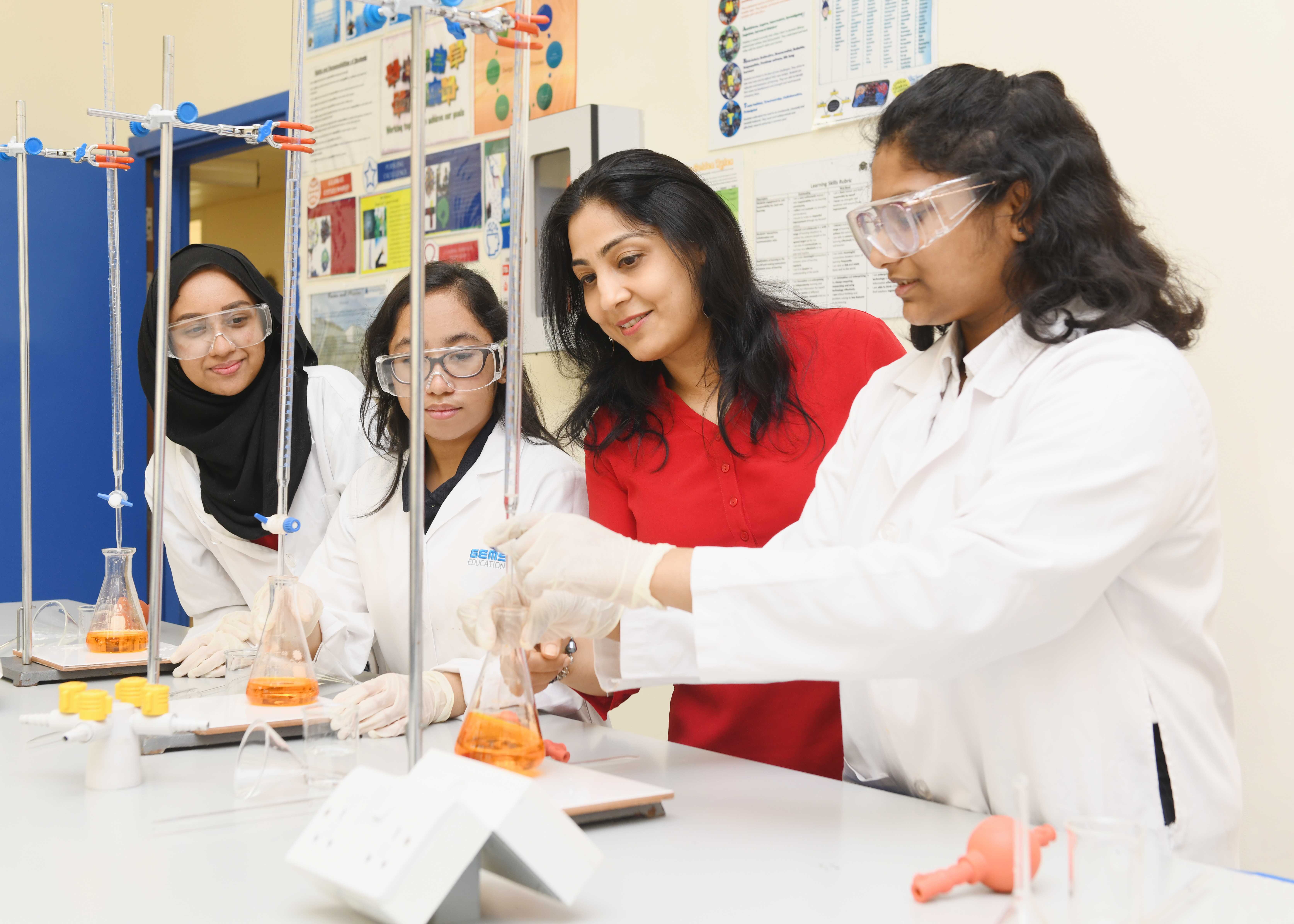
Science is at the heart of understanding our world and preparing learners for the opportunities and challenges of the future. At The Winchester School, our ambitious and engaging Science curriculum, founded on the EYFS Statutory Framework and the National Curriculum for England, inspires every child to be curious, ask questions, think critically, and develop a lifelong passion for scientific discovery.
We believe that every child is a scientist. Through a fully inclusive, highly personalised, and enquiry-led curriculum, students develop secure scientific knowledge alongside the skills, attitudes, and confidence to investigate, analyse, evaluate, and solve problems using evidence. Our curriculum nurtures intellectual curiosity while encouraging learners to become independent thinkers, responsible global citizens, and environmentally conscious leaders.
Science learning is enriched through Working Scientifically, experiential learning, STEAM education, Artificial Intelligence (AI)-enhanced learning, sustainability, and innovative digital technologies. By connecting classroom learning with authentic real-world experiences, we empower students to appreciate the relevance of science in everyday life and equip them with the competencies needed to thrive in an increasingly interconnected, technology-driven, and rapidly evolving world.
Head of Department
Ms. Mandeep Kaur
Head of Primary Science
Email: [email protected]
Our Department Philosophy
Our vision is to develop confident, inquisitive, and scientifically literate learners who are inspired to explore the natural world, think critically, and use scientific understanding to make informed decisions that positively impact society and the environment.
Through high-quality teaching and meaningful learning experiences, we enable every learner to:
- Develop secure scientific knowledge and conceptual understanding.
- Think scientifically by asking questions, making predictions, investigating, analysing evidence, and drawing reasoned conclusions.
- Develop curiosity, creativity, resilience, and perseverance through enquiry-based learning.
- Communicate scientific ideas confidently using accurate scientific vocabulary.
- Apply scientific understanding to solve real-world problems and make meaningful connections across the curriculum.
- Develop environmental awareness and recognise their responsibility as global citizens committed to sustainability.
- Use emerging technologies responsibly and ethically to enhance scientific enquiry and innovation.
- Become future-ready learners equipped with the knowledge, skills, and attitudes required for lifelong learning.
A Highly Personalised and Inclusive Science Curriculum
At The Winchester School, we recognise that every child is unique and develops scientific understanding at their own pace. Our fully inclusive and highly personalised Science curriculum ensures that every learner, regardless of their starting point, abilities, interests, language profile, or learning needs, is appropriately supported, challenged, and inspired to achieve their full potential.
Our curriculum reflects the belief that all children can become successful scientists through high expectations, adaptive teaching, and carefully planned learning experiences that promote curiosity, confidence, independence, and resilience.
Teachers design engaging lessons that provide appropriate levels of support, challenge, and enrichment, enabling every learner to make sustained progress while developing both substantive scientific knowledge (the scientific concepts and content pupils learn) and disciplinary knowledge (understanding how scientists investigate, evaluate evidence, and construct scientific explanations).
Learning is personalised through responsive teaching that builds on each child's prior knowledge, misconceptions, strengths, interests, and aspirations. Practical investigations, collaborative enquiry, discussion, reflection, and purposeful questioning ensure that every learner actively participates and experiences success.
Assessment is integral to this personalised approach. Teachers use a comprehensive range of assessment evidence to identify individual strengths, monitor progress, and plan responsive teaching, targeted intervention, and appropriate challenge.
Assessment information includes:
- Ongoing formative assessment through classroom observations, scientific discussions, questioning, practical investigations, quizzes, retrieval practice, and feedback.
- Summative assessments aligned with the expectations of the National Curriculum for England.
- GL Assessments, including the Progress Test in Science (PTS) and the Cognitive Abilities Test (CAT4), to identify students' scientific understanding, reasoning abilities, learning potential, and personalised next steps.
- National and international benchmark assessments, including the Trends in International Mathematics and Science Study (TIMSS), where applicable, enabling us to benchmark student achievement against international standards and continually refine teaching and learning.
By triangulating evidence from multiple assessment sources, teachers gain a holistic understanding of each learner's academic progress, scientific reasoning, cognitive strengths, and learning needs. This enables them to provide timely intervention, extend higher-attaining learners, personalise learning pathways, and ensure that every child is appropriately supported and challenged.
Our commitment to inclusive education ensures that every learner benefits from high-quality teaching, equitable opportunities, and an inspiring learning environment where curiosity is celebrated, diversity is valued, and scientific thinking flourishes.
The Aims of Our Science Curriculum
Our Science curriculum reflects the aims of the National Curriculum for England, enabling students to:
- Develop secure scientific knowledge and conceptual understanding through the disciplines of biology, chemistry, and physics.
- Develop understanding of the nature, processes, and methods of science through different types of scientific enquiry that help them answer scientific questions about the world around them.
- Appreciate the uses and implications of science in the past, present, and future while recognising its contribution to improving lives and shaping a sustainable world.
These aims are realised through a carefully sequenced curriculum that progressively develops scientific knowledge, enquiry skills, critical thinking, creativity, collaboration, communication, and responsible citizenship from the Early Years Foundation Stage through to Key Stage 2.
Science Across the Primary School
Our Science curriculum provides a coherent progression of learning from the Early Years Foundation Stage through Key Stage 2, ensuring that knowledge, skills, and understanding are built systematically over time.
Students develop both substantive knowledge—the scientific concepts they learn—and disciplinary knowledge—the understanding of how scientific knowledge is generated through observation, enquiry, investigation, evidence, and evaluation.
As learners progress through the primary years, they become increasingly confident in asking questions, planning investigations, gathering evidence, analysing findings, evaluating outcomes, and communicating scientific ideas using accurate scientific vocabulary.
The curriculum promotes curiosity, resilience, creativity, and critical thinking while enabling students to understand the relevance of science in everyday life and its importance in addressing global challenges.
Early Years Foundation Stage (FS1 & FS2)
In the Early Years Foundation Stage, scientific understanding is developed through the Understanding the World area of learning, particularly The Natural World, as outlined in the EYFS Statutory Framework.
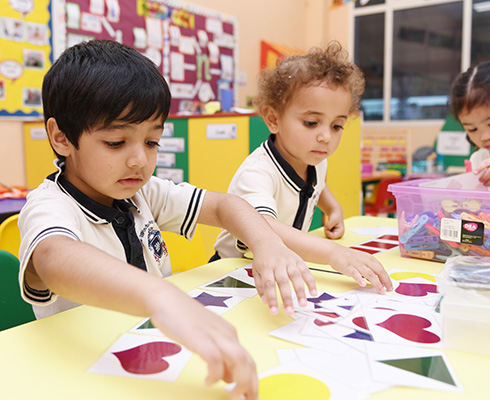
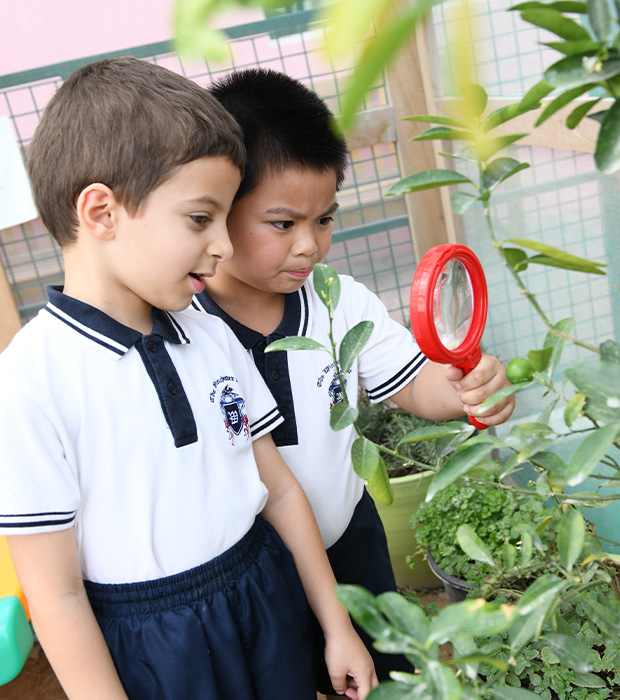
Children learn through purposeful play, exploration, first-hand experiences, and meaningful interactions that encourage curiosity about the world around them. They observe seasonal changes, explore living things, investigate materials, notice patterns, ask questions, make predictions, compare, classify, and communicate their observations using increasingly rich language.
Learning is enriched through indoor and outdoor exploration, sensory experiences, nature walks, practical investigations, gardening, and opportunities to explore the environment, laying strong foundations for future scientific learning.
Key Stage 1 (Years 1–2)
Building upon the foundations established in EYFS, students follow the National Curriculum for England, developing essential scientific knowledge through practical enquiry and first-hand investigation.
Working Scientifically
Students develop the skills to:
- Ask simple scientific questions.
- Observe closely using simple equipment.
- Perform simple comparative tests.
- Identify and classify.
- Use observations and ideas to answer scientific questions.
- Gather, record, and communicate data and findings.
Scientific Knowledge
Students develop understanding of:
- Plants
- Animals, including Humans
- Everyday Materials
- Seasonal Changes
- Living Things and Their Habitats
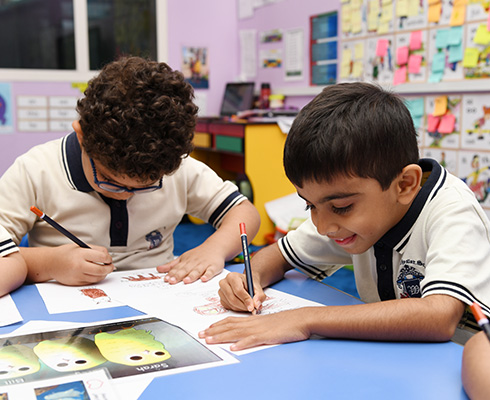
Practical investigations enable children to explore, predict, observe, compare, classify, and communicate their findings while developing accurate scientific vocabulary and growing confidence as young scientists.
Key Stage 2 (Years 3–6)
In Key Stage 2, students deepen their scientific knowledge and develop increasing independence as investigators, critical thinkers, and problem-solvers.
Working Scientifically
Students progressively develop the ability to:
- Ask relevant scientific questions.
- Plan different types of scientific enquiries.
- Make systematic and careful observations.
- Take accurate measurements using appropriate equipment.
- Collect, record, classify, and present data.
- Identify patterns and relationships.
- Carry out comparative and fair tests.
- Draw evidence-based conclusions.
- Evaluate investigations and suggest improvements.
- Communicate scientific ideas using appropriate scientific language.
Students experience all five enquiry types identified within the National Curriculum:
- Observing over time
- Pattern seeking
- Identifying, grouping and classifying
- Comparative and fair testing
- Research using secondary sources
Scientific Knowledge
Students study:
- Plants
- Animals, including Humans
- Living Things and Their Habitats
- Rocks
- Light
- Forces and Magnets
- States of Matter
- Sound
- Electricity
- Earth and Space
- Properties and Changes of Materials
- Evolution and Inheritance
Learning is enriched through practical investigations, collaborative enquiry, scientific modelling, and opportunities to apply scientific understanding to authentic real-world situations.
Experiential Learning, STEAM and Sustainability
Science comes alive through meaningful, hands-on experiences that encourage learners to investigate, create, innovate, and solve problems.
Students participate in:
- Practical investigations
- Outdoor learning
- Nature exploration
- Fieldwork
- Environmental and sustainability projects
- Engineering and design challenges
- Cross-curricular STEAM projects
- Scientific modelling
- Data collection and analysis
- Collaborative problem-solving
These authentic learning experiences enable students to apply scientific knowledge, develop enquiry skills, and appreciate the relevance of science in everyday life while fostering environmental stewardship and global responsibility.
AI and Digital Innovation in Science
Technology plays a vital role in enriching scientific learning and preparing students for the future.
Artificial Intelligence (AI)-enhanced learning and innovative digital technologies are thoughtfully integrated to personalise learning, deepen conceptual understanding, strengthen scientific enquiry, and encourage independent research.
Students use digital tools to:
- Explore scientific concepts through interactive simulations.
- Collect, analyse, and interpret scientific data.
- Model scientific phenomena.
- Conduct research using reliable digital sources.
- Collaborate and communicate findings effectively.
- Receive personalised feedback that supports progress and deepens understanding.
Alongside developing digital confidence, students learn to use emerging technologies responsibly, ethically, and purposefully.
Assessment for Learning
Assessment is integral to high-quality teaching and learning and supports every child's scientific development.
Teachers use ongoing assessment to monitor understanding, celebrate achievement, identify misconceptions, and inform personalised next steps.
Assessment includes:
- Ongoing formative assessments
- Classroom observations
- Scientific discussions
- Practical investigations
- Questioning and feedback
- Self and peer assessment
- End-of-unit assessments
- Summative assessments aligned with the National Curriculum for England
- GL Progress Test in Science (PTS)
- Cognitive Abilities Test (CAT4)
- TIMSS benchmarking, where applicable
Assessment outcomes inform adaptive teaching, targeted intervention, enrichment opportunities, and personalised learning pathways that ensure every learner achieves sustained progress.
Learning Beyond the Classroom (Enrichment Opportunities)
Science learning extends beyond the classroom through a rich programme of experiences that inspire curiosity, creativity, and innovation.
Students participate in:
- Science Week
- STEAM Innovation Week
- Environmental and sustainability initiatives
- Eco-school projects
- Educational visits and fieldwork
- STEM competitions
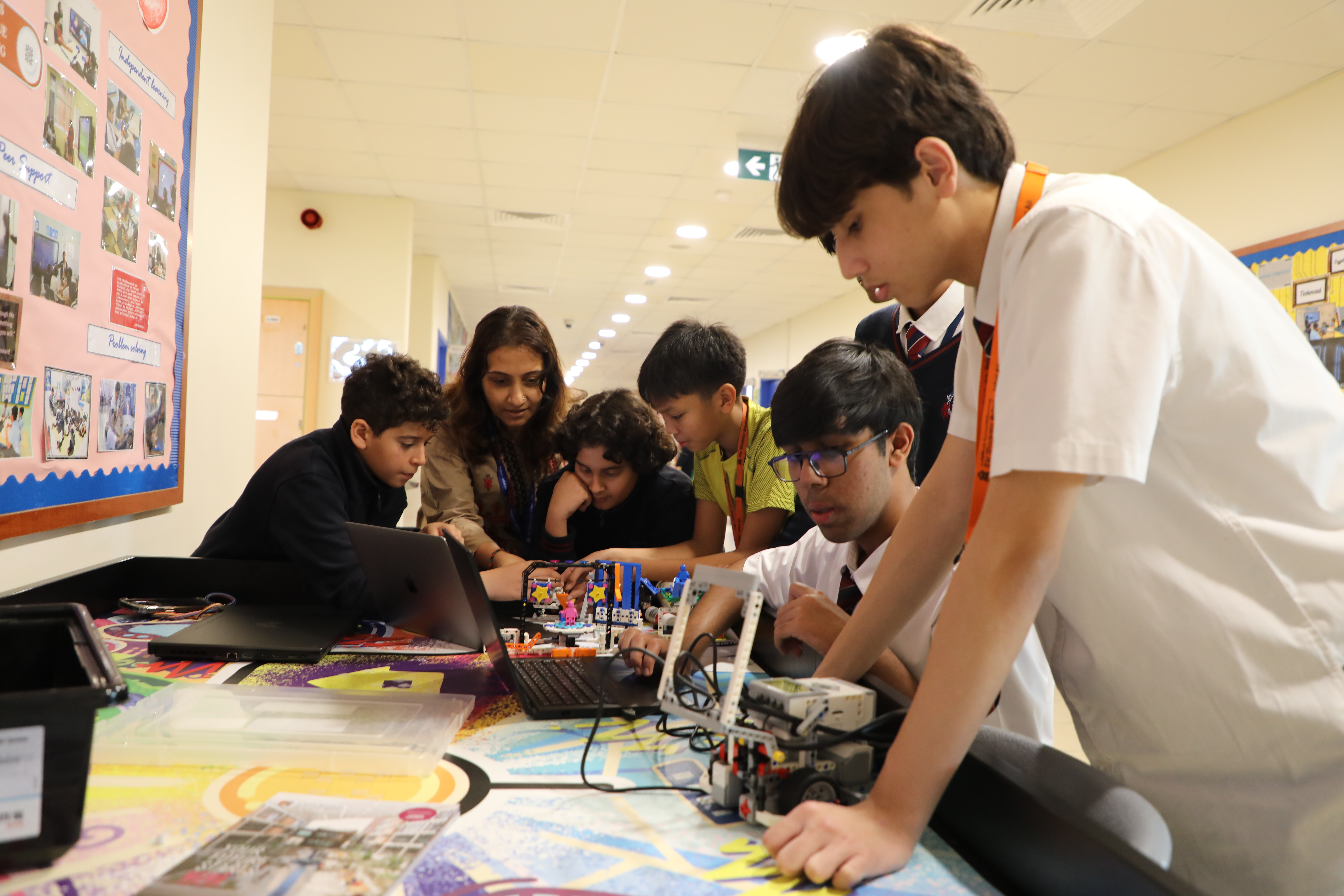
- Robotics and coding challenges
- Science exhibitions
- Guest speakers and workshops
- Cross-curricular enquiry projects
- Family Science Workshops
These opportunities foster collaboration, leadership, resilience, creativity, and a lifelong appreciation of science.
Preparing Learners for the Future
Our Science curriculum equips students with the knowledge, skills, and scientific thinking needed to understand an increasingly complex world and contribute positively to society.
By combining the academic rigour of the National Curriculum for England with inclusive practice, highly personalised learning, Working Scientifically, experiential learning, STEAM, Artificial Intelligence (AI)-enhanced learning, and innovative digital technologies, we develop confident, inquisitive, and responsible learners who are prepared to embrace future opportunities and challenges.
At The Winchester School, we inspire every child to question, investigate, discover, and innovate—developing scientifically literate learners who are ready to shape a better future.